
Honey bees are incredible creatures, playing a crucial role in our ecosystems and food production. From their intricate social structures to their vital pollination activities, these bees are fundamental to our world. However, they face numerous threats that endanger their populations and our food supply.
To learn more about the importance of honey bees and how we can protect them, keep reading.

Key Takeaways
- Honey bees are key pollinators with a complex social structure and distinct life cycle.
- Their pollination activity is crucial for diverse ecosystems and human agriculture.
- They are facing serious environmental challenges that threaten their survival.
The Biology and Life Cycle of Honey Bees
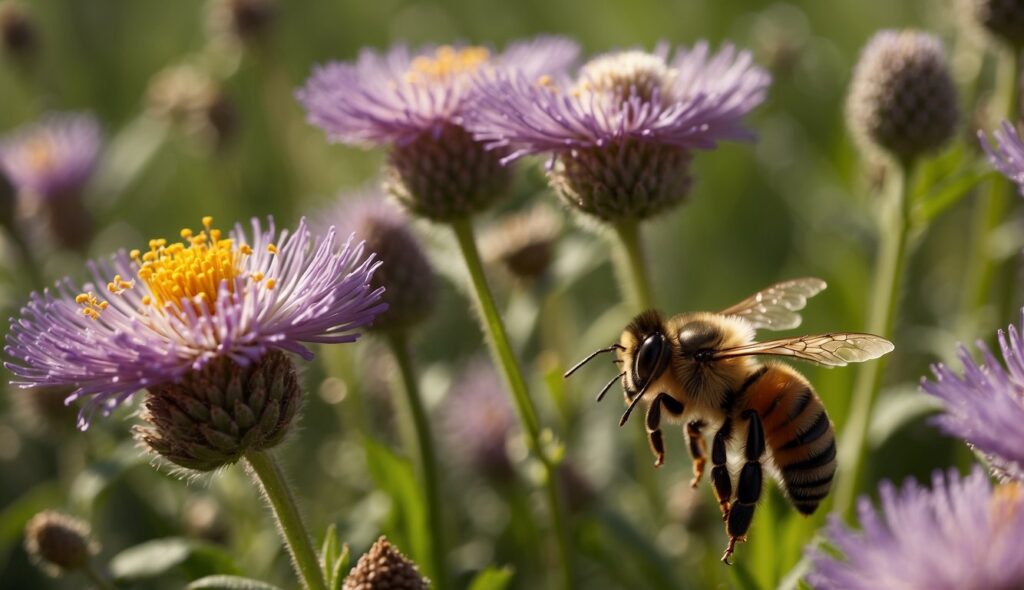
Honey bees exhibit a complex biology and a sophisticated life cycle that is divided into distinct stages and roles within the hive. Vital to ecosystems, they are the only species of bee that produce honey in significant quantities and have a social structure with specific roles for their survival.
Understanding the Roles: Queen, Workers, and Drones
Queen: The queen bee is the only fertile female in the hive and is the mother of all other bees. Her primary role is to lay eggs. A healthy queen can lay up to 2,000 eggs per day during the breeding season. Once a virgin queen becomes fertile, after a successful mating flight, she rarely leaves the hive again.
Workers: Worker bees are all infertile females. They undertake numerous tasks within the hive, including cleaning, nursing the brood (eggs, larvae, and pupae), foraging for nectar and pollen, and producing wax to build the honeycomb. The life span of workers varies from 6 weeks during active seasons to up to 9 months during less active times.
Drones: Male bees are known as drones and their sole purpose is to mate with a virgin queen. They do not possess stingers and do not participate in nectar and pollen gathering. Drones are typically present in the hive only during the spring and summer months; they are expelled from the hive as winter approaches due to their lack of utility in the colder months.
The Development Stages: From Egg to Adult
The life cycle of a honey bee is a process of complete metamorphosis which includes the stages of an egg, larvae, pupa, and finally, an adult:
- Egg: The life cycle commences when the queen lays an egg in a wax cell. Each egg is tiny and somewhat cylindrical in shape. These eggs hatch into larvae after about three days.
- Larvae: Freshly hatched larvae are fed royal jelly for the first few days, and then the diet switches to a mixture of pollen and honey for worker bees or continues with royalty jelly for potential queens. The larval stage spans approximately 6 days.
- Pupa: After the larval stage, they transform into pupae. During this stage, which may last from 12 to 15 days depending on the role the bee will assume as an adult (worker, queen, or drone), the bees develop legs, wings, and eyes. The worker pupae take approximately 12 days to mature, queens take 15 to 16 days, and drones take about 14 days.
- Adult: The transformation culminates in an adult bee. Workers and drones emerge ready to take on their roles in the hive, while virgin queens will prepare for mating flights to establish their own colonies. Adult worker bees typically live up to 6 weeks in the summer but can live longer during the winter months when the hive is less active.
Hives and Beekeeping
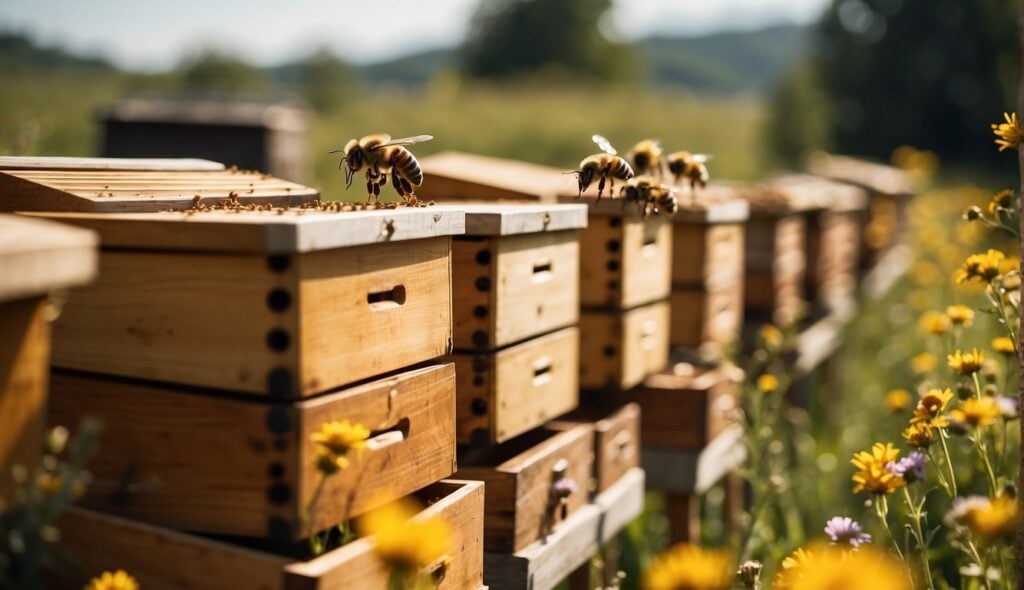
Hives serve as the structural foundation for honeybee colonies, facilitating the production of honey and the proliferation of the species. Beekeeping practices sustain these essential ecosystems.
Types of Bee Hives
There are several hive designs used in beekeeping, each conducive to different beekeeping goals and practices. The most common types are:
- Langstroth hive: Characterized by its removable frames, which allow for easy inspection and management of the bee colony.
- Top-bar hive: A simpler design that uses horizontal bars from which bees build their comb, it supports the natural comb structure and is easier to construct.
- Warre hive: Mimics the vertical structure of a tree hollow, promoting a more natural environment for bees while still allowing for honey collection.
The structure of a hive is critical, as it consists of a series of hexagonal cells where bees store honey, pollen, and where the queen bee lays eggs. These cells form the honeycomb, which is made from beeswax produced by the honeybees themselves.
Beekeeping Practices and Management
Beekeeping involves several best practices to manage and maintain healthy colonies:
- Protective gear: Beekeepers use suits, gloves, and veils to avoid bee stings while managing hives.
- Hive tools: Essential for hive management, tools such as smokers and hive scrapers aid in the safe inspection and maintenance of hives.
- Regular inspections: Checking for the health of the queen bee, signs of disease, and mite infestations is crucial for colony success.
Monitoring the hive’s structural integrity, ensuring sufficient space for honey storage, and managing swarming behavior are also important aspects of beekeeping. Understanding bee behavior and colony dynamics is fundamental for beekeepers to successfully manage hives and harvest honey without disrupting the bee colony’s lifecycle.
Pollination and Agriculture

Honey bees contribute significantly to the ecosystem and agriculture; they are essential for the pollination of many flowering plants and crops, greatly influencing the global food sources for humans.
The Role of Honey Bees in the Ecosystem
Honey bees (Apis mellifera) are critical pollinators in ecosystems worldwide. They facilitate the reproductive process of flowering plants by transferring pollen from the male parts of a flower to the female parts of another flower. This cross-pollination is essential for the genetic diversity and vitality of plant populations. As they forage for nectar to produce honey, they incidentally carry pollen on their bodies from one flower to another — a process crucial to the survival of wild flora and the production of natural vegetation.
Impact on Agriculture and Human Food Sources
In agriculture, honey bees play a pivotal role in the production of a variety of crops, including almonds, vegetables, and other food sources. They are key to the success of these crops, as many require pollination to bear fruit. Here is a brief overview of the influence of honey bee pollination on agriculture:
- Almonds: Nearly exclusive reliance on honey bee pollination, with each acre of almond trees requiring one to two hives.
- Vegetables: Many vegetables depend on pollinators, particularly for seed production.
- Fruit crops: Fruit trees gain increased yield and quality through effective bee pollination.
The economic impact of honey bee pollination is profound; they not only ensure the abundance of crops but also significantly enhance their quality, affecting global agricultural markets and the dietary intake of humans. Their pollination services indirectly support a diverse and nutritious palette of food that sustains human populations and the economy.
Challenges and Conservation
Honey bees face a myriad of challenges today that pose significant risks to their populations and the critical roles they play in ecosystems. These challenges include a range of environmental, biological, and human-induced threats. Conservation efforts are increasingly important to ensure the survival of these essential pollinators.
Pests, Diseases, and Environmental Threats
Parasites such as the Varroa mite have a particularly devastating effect on honey bee colonies. These mites attach to bees, weakening them and vectoring viruses. Colony Collapse Disorder (CCD), a phenomenon where worker bees disappear, leaving behind a queen and immature bees, is another significant challenge, although the incidence rate has decreased. Other diseases, such as American Foulbrood, pose severe threats as well.
Pesticides are a notorious environmental threat. Exposure can be lethal or sublethal, affecting bees’ ability to navigate and forage effectively. Foraging patterns are disrupted not only by chemicals but also by habitat loss, leading to inadequate nutrition and reduced honey production.
Climate change exacerbates these threats, altering the distribution of flowers and thus affecting bee foraging habits and food availability. Extreme weather events can damage habitats and the flowers bees rely on for nectar and pollen.
Conservation Efforts to Protect Honey Bees
Conservation initiatives focus on several fronts to counteract the decline of honey bee populations. Advocacy for reduced pesticide use and the promotion of integrated pest management practices are vital components. Creation of bee-friendly environments by planting diverse, nectar-rich plants supports healthy foraging opportunities.
Protecting not only Western honey bees but also their less-known wild counterparts is important for biodiversity. Conservation groups highlight the need to preserve various subspecies of honey bees, such as the more docile European varieties, while carefully managing the spread of the more aggressive Africanized honey bee.
Conservation also addresses the human element, educating beekeepers on best practices for hive management, including swarming control, which can minimize the spread of aggressive traits and diseases. Collaborative efforts between governments, organizations, and the public are continuing to develop strategies and policies aimed at mitigating threats and strengthening bee populations.
Frequently Asked Questions
What is the scientific name of the honey bee?
The scientific name for the common honey bee is Apis mellifera.
What do honey bees typically eat?
Honey bees feed primarily on nectar and pollen, which they collect from flowering plants.
How long is the lifespan of a honey bee?
Worker bees typically live for 6 weeks during active seasons, while queens can live for several years.
What are the various types of honey bees?
There are three types of honey bees in a hive: the queen, workers, and drones. The queen is responsible for laying eggs, the workers perform the labor, and the drones’ primary role is to mate with the queen.
How do honey bees contribute to the environment?
Honey bees are crucial pollinators, aiding in the reproduction of many plants and crops, thus maintaining biodiversity and food security.
What is the process of honey production in a bee colony?
Bees convert nectar to honey by a process of regurgitation and evaporation, storing it as a food source in the honeycombs of their hive.

Honey Bees are so Important!
Honey bees are super important for our planet and food supply. They pollinate tons of plants we rely on for fruits, veggies, and honey. To keep them buzzing happily, we need to back conservation efforts and sustainable practices. Let’s work together to ensure their future!
Interested in learning more about these miraculous pollinators? Visit my bees page to learn all about the different roles within the beehive, different bee species, beekeeping, and more!