
The best apple cider press for your harvest depends on how much fruit you have, how you will crush it, and whether you want to turn a handle or use water pressure. A bigger basket can reduce the number of loads, but it also means more equipment to set up, clean, and store.
Here are four home-use presses to compare, from a small wooden basket to a larger water-powered model. Every option below needs crushed apples, not whole fruit. Plan for an apple grinder or another suitable crushing method as well as the press.
As an Amazon Associate, we earn from qualifying purchases.
Which cider press fits your harvest?
- For small batches: EJWOX 1.6-gallon wooden press — a compact manual basket for occasional pressing.
- For a mid-size wooden press: SQUEEZE master 3.17-gallon / 12-liter press — more basket space while keeping a hand-operated screw mechanism.
- For a stainless-steel basket: EJWOX 3.69-gallon / 14-liter T-handle press — a manual alternative for buyers who prefer steel to wood.
- For larger batches with water available: EJWOX 10.7-gallon hydropress — uses water pressure to do the pressing; requires a suitable water connection and pressure control.
Capacity means basket volume, not gallons of finished cider. Juice yield varies with the apples, their ripeness, how finely they are crushed, and the pressing process. Compare the exact size selected on the seller’s page before ordering; several of these listings offer more than one size.

For Small Batches
EJWOX 1.6-Gallon Wooden Press

This EJWOX model has a wooden basket and a manual screw press. Its 1.6-gallon basket is the smallest of these four options, making it a reasonable starting point if you want to press a modest amount of fruit without storing a larger basket.
It uses pressing blocks to transmit pressure to the fruit. Follow the supplied assembly and loading instructions, secure the base as directed, and leave space below the outlet for a clean collection container.
- Why consider it: Small basket; no powered pressing mechanism or water connection required.
- Tradeoff: A larger harvest will take more loading, pressing, and emptying cycles. The wooden parts need thorough cleaning and drying.
- Before ordering: Confirm the 1.6-gallon wooden version, included blocks, and filter bag. A grinder is a separate part of the setup.
A Mid-Size Wooden Option
SQUEEZE master 3.17-Gallon / 12-Liter Press
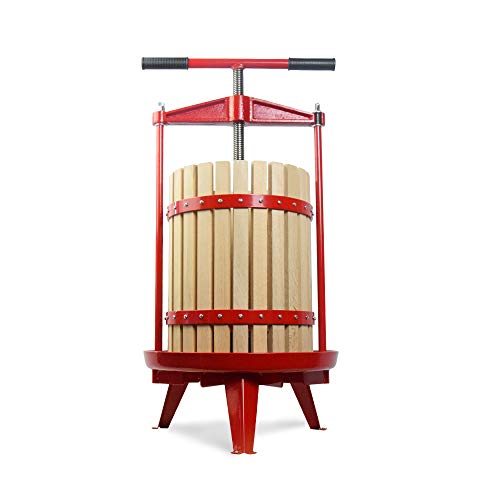
The SQUEEZE master 12-liter model combines a wooden basket with a hand-operated T-handle screw. Its advertised 3.17-gallon capacity offers more room per load than the 1.6-gallon EJWOX, without moving to a water-powered system.
This is the option to compare if you like a traditional wooden press and expect repeated batches during apple season. You still supply the force by turning the handle, and you still need to prepare the apples before loading.
- Why consider it: A middle-size basket and a straightforward manual pressing method.
- Tradeoff: Hand pressing takes effort, and capacity alone does not tell you how quickly you can process a harvest.
- Before ordering: Select the 12-liter / 3.17-gallon version. Check the included pressing parts and filter bag, and allow room to turn the handle.
A Steel-Basket Option
EJWOX 3.69-Gallon / 14-Liter T-Handle Press

This EJWOX press pairs a stainless-steel basket with a manual screw and T-handle. The 3.69-gallon version is worth comparing with the 12-liter wooden press if basket material is an important part of your decision.
A steel basket avoids wooden basket slats, but it does not eliminate cleanup: pulp, the filter bag, collection surfaces, and moving parts still need attention. Follow the manufacturer’s cleaning and storage instructions for the entire press.
- Why consider it: A stainless-steel basket with manual operation and no water-powered pressing system to connect.
- Tradeoff: You still turn the screw by hand; a steel basket does not establish a higher juice yield.
- Before ordering: Choose the 3.69-gallon / 14-liter size. The smaller 2.38-gallon model is a different capacity. Check dimensions and included accessories.
For Larger Batches
EJWOX 10.7-Gallon Hydropress
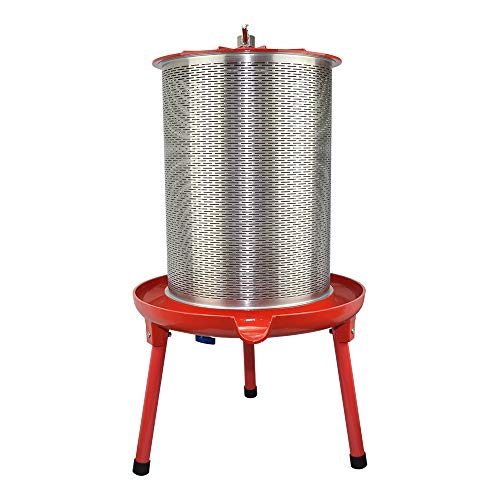
The EJWOX hydropress uses water pressure to expand an internal bladder, pressing crushed fruit against the basket. It does not use an electric pressing motor. Its 10.7-gallon basket is substantially larger than the manual options above.
This is worth considering if you have enough fruit to justify the larger setup and a suitable water supply near your pressing area. You will also need a plan for drainage and enough crushing capacity to fill the basket without creating a bottleneck.
- Why consider it: Water pressure supplies the pressing force instead of repeated handle turning.
- Tradeoff: More space, a compatible water connection, and controlled pressure are required. It may be more equipment than an occasional small batch needs.
- Before ordering: Select the 10.7-gallon version, not the 5.3-gallon option. EJWOX specifies a maximum pressure of 3 bar; follow the model’s manual and do not assume your water supply is suitable without checking.
What to check before buying an apple cider press
Start with the amount of fruit you actually have
Think about the harvest you expect to process in one session, your available workspace, and where the press will live afterward. A small basket means more cycles. A large basket can be awkward to handle and store if you only make cider once or twice a year. Check assembled dimensions and weight, not just capacity.
Budget for crushing and collection
A press separates juice from prepared fruit; it is not an apple crusher. Check that you have a suitable grinder or crushing method, a filter bag compatible with the basket, and clean containers that fit beneath the outlet. Include these items when comparing the total cost of different presses.
Check setup, cleanup, and replacement parts
Read the manual before buying if it is available. Look for instructions on securing the base, loading the basket, applying pressure, and cleaning food-contact surfaces. Check whether replacement bags, pressing blocks, or hydropress parts can be obtained. Choose equipment you can comfortably lift and clean after a long pressing session.
Does pressing make cider safe to drink?
No. Freshly pressed juice is not pasteurized, and washing apples does not eliminate every risk. The FDA warns that untreated juice can contain harmful bacteria, especially dangerous for children, older adults, pregnant people, and people with weakened immune systems. Read the FDA’s juice-safety guidance before serving homemade cider.
How we selected these presses
This comparison is based on product listings and manufacturer specifications, with attention to basket capacity, pressing method, and the setup a home user needs. It is not a hands-on performance test. We have not measured extraction yield, pressing speed, or long-term durability, so we do not rank these presses on those claims.
For most buying decisions, start with three questions: How much fruit will I process? Do I prefer a wooden or steel basket? Do I have the space and water connection for a hydropress? Then check the exact model, current offer, included accessories, and return terms before purchasing.